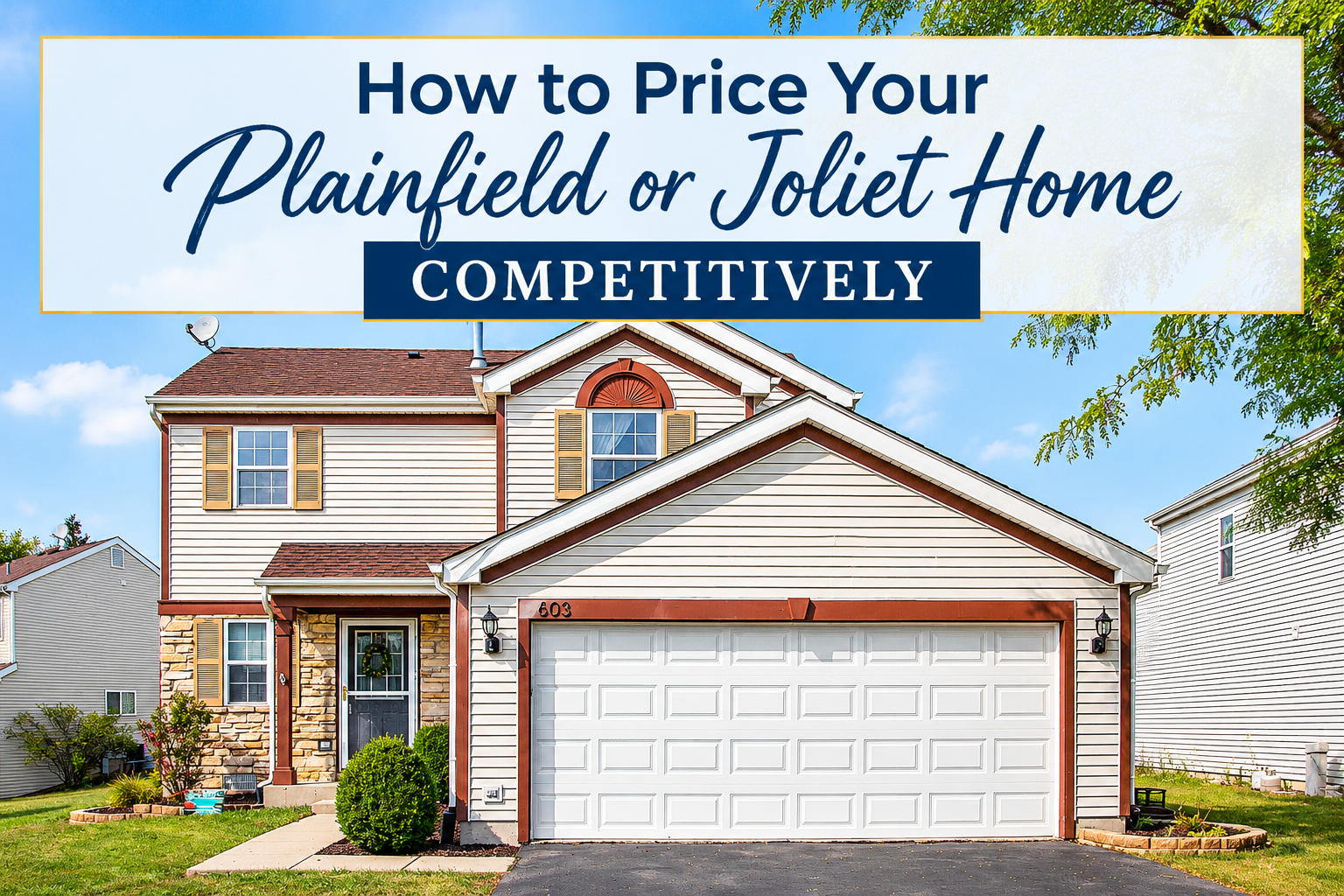
How to Price Your Plainfield or Joliet Home Competitively
By Chad Haug | C Edwards Real Estate | 20+ Years of Real Estate Experience
If you’re thinking about selling your home in Plainfield or Joliet, Illinois, one of the first questions you’re probably asking is: “How much should I ask for my home?”
It’s an important question. You want to get the best possible price while attracting serious buyers and avoiding unnecessary time on the market.
The challenge is that your home’s value isn’t determined by what you originally paid, how much you’ve invested in improvements, or what an online estimate says. Your asking price should reflect your home’s features, recent comparable sales, competing listings, and what buyers are willing to pay in the current market.
At C Edwards Real Estate, I put more than 20 years of real estate experience to work for my clients. My goal is to provide the market insights, pricing guidance, and selling strategy you need to make an informed decision—with your needs and goals coming first.
Here’s how to approach pricing your Plainfield or Joliet home competitively.
1. Start With Recent Comparable Home Sales
One of the most useful tools for determining a competitive asking price is a comparative market analysis, commonly called a CMA.
A CMA evaluates properties similar to yours to help estimate a realistic market value. It typically considers recently sold homes, properties currently for sale, and pending sales when reliable information is available.
For the most useful comparison, look at homes with similar:
- Location and neighborhood
- Square footage and floor plan
- Number of bedrooms and bathrooms
- Lot size and outdoor features
- Updates and overall condition
- Garage, basement, and other desirable features
For example, two homes in Plainfield may have the same number of bedrooms but different values because one has a finished basement, updated kitchen, or larger lot. The same is true in Joliet, where property location, age, condition, and nearby competing homes can affect buyer interest.
The key is to compare your home with properties that buyers are likely to consider as alternatives—not simply homes with similar asking prices.
2. Understand the Difference Between Plainfield and Joliet Markets
Although Plainfield and Joliet are neighboring communities, you shouldn’t assume that pricing trends are identical across both areas.
Even within one city, market conditions can differ by neighborhood, property type, price range, and condition.
In Plainfield, buyers may compare homes in established subdivisions, newer residential developments, or areas closer to downtown. In Joliet, the mix of property ages, architectural styles, lot sizes, and neighborhood characteristics can create different pricing considerations.
When determining a listing price, I look at the specific market surrounding the property rather than relying on a broad citywide average.
Questions worth asking include:
- How many similar homes are currently competing with yours?
- What have comparable homes actually sold for?
- How long are similar properties taking to sell?
- Are buyers responding to updated homes differently from properties needing work?
- What features are most likely to matter to buyers in your price range?
Local pricing insight: A home value estimate for all of Plainfield or all of Joliet may not accurately represent your individual property. Your specific neighborhood, condition, and competition matter.
3. Don’t Rely on Online Home Value Estimates Alone
Online home valuation tools can be useful for getting a general idea of your home’s possible value. However, they may not fully account for renovations, deferred maintenance, layout differences, or features that distinguish your property from nearby homes.
An automated estimate also may not reflect the newest comparable sales or the homes buyers are considering right now.
Use online estimates as a starting point—not as your final pricing decision.
A personalized market analysis can help you understand how your property compares with similar homes and why a particular asking-price range may make sense.
At C Edwards Real Estate, I believe sellers deserve to understand the reasoning behind a pricing recommendation, not just receive a number.
4. Evaluate Your Home’s Condition and Improvements
Before deciding on a listing price, take an objective look at your home’s condition.
Consider the features buyers will notice during online research and showings:
- Kitchen and bathroom condition
- Flooring, paint, and overall presentation
- Roof, windows, and major mechanical systems
- Basement condition and any signs of moisture
- Landscaping, curb appeal, and outdoor living space
- Maintenance issues that may need attention
Improvements can help a home stand out, but not every renovation returns its full cost at resale.
For example, fresh paint, decluttering, thorough cleaning, and improving curb appeal may be worthwhile preparation steps. A major kitchen renovation or expensive landscaping project may not be necessary or financially beneficial before listing.
I help sellers consider the likely impact of repairs and updates alongside the competition and their goals. The objective is to make smart decisions—not spend money simply because you’re selling.
5. Price Strategically From the Beginning
Your initial asking price helps determine which buyers see your property and whether they decide to schedule a showing.
Pricing too high can reduce interest from qualified buyers. If a property sits on the market without meaningful activity, sellers may eventually need to adjust the price, and buyers may begin questioning its value.
Pricing competitively can help position your home against similar properties and encourage serious buyers to consider it.
That doesn’t mean every home should be priced low. It means your asking price should be supported by current market evidence and a strategy that reflects your priorities.
A good pricing discussion should include:
- A realistic range supported by comparable sales
- The asking prices of competing homes
- Your desired timeline
- The home’s condition and presentation
- Your estimated selling expenses and financial goals
- A plan for reviewing buyer response after listing
You should understand why the recommended price makes sense and what information would lead you to reconsider it.
6. Consider How Buyers Search for Homes
Buyers frequently use online search filters to narrow homes by price. As a result, the price you choose can affect which searches include your property.
For example, a home priced just above a common buyer budget may not appear in searches where that buyer has set a maximum price limit.
Your pricing strategy should take these search habits into account without relying on a pricing trick or arbitrary discount.
The right price range depends on your home’s market value, the properties competing with it, and the type of buyer you hope to reach.
Strong listing photography, accurate property details, and a clear marketing plan also help buyers understand the value your home offers.
7. Monitor Buyer Feedback and Adjust When Necessary
Once your home is listed, the market begins providing feedback.
Showing activity, buyer comments, online interest, competing listings, and offers can help reveal whether your price and presentation are working together effectively.
If similar homes are attracting showings and offers while yours receives little attention, it may be time to review the pricing strategy, marketing, or condition of the property.
If buyers are viewing the home but repeatedly raising similar concerns, those comments may also provide useful information.
A price adjustment should be based on evidence—not panic or guesswork.
My role is to help you interpret the feedback, review changing market conditions, and determine whether a change makes sense for your goals.
8. Look Beyond the Highest Offer
A competitive asking price is designed to attract buyers, but the final purchase offer also deserves careful consideration.
The highest offer isn’t always the strongest overall offer. Financing, contingencies, inspection provisions, closing dates, and requested seller concessions can all affect the transaction.
For example, an offer with a higher purchase price may include terms that introduce additional uncertainty. Another offer might better match your timing or financial priorities.
With more than 20 years of real estate experience, I understand the importance of evaluating the full offer—not just the headline number.
My goal is to help you understand your options, negotiate thoughtfully, and protect your interests throughout the transaction.
Why Work With C Edwards Real Estate?
Pricing a home is both a financial decision and an important part of your next move. You deserve a strategy based on current market information, your home’s individual characteristics, and what matters most to you.
At C Edwards Real Estate, I bring more than 20 years of experience to helping homeowners understand market values, prepare their homes, develop marketing strategies, and negotiate offers.
Whether you’re selling in Plainfield or Joliet, I want you to have the information you need to make confident decisions.
Our philosophy is straightforward: put our clients’ needs first, provide honest guidance, and work to create an exceptional selling experience.
Ready to Find Out What Your Plainfield or Joliet Home Could Sell For?

If you’re considering selling, let’s start with a conversation about your property, your plans, and your goals.
I’ll help you review relevant comparable sales, understand your competition, and develop a pricing strategy tailored to your home and the current market.
Request a personalized home-value analysis:
https://www.cedwardsrealestate.com/your-homes-value/
Learn more about our home-selling services:
https://www.cedwardsrealestate.com/sellers/